
Review · SPAIN
Santiago de Compostela: Massage Treatment
Finishing the Camino with tired feet and tight calves? This private massage near Santiago Cathedral gives you a practical way to recover without leaving the historic center. You can choose foot reflexology for worn-out feet or a longer full-body treatment for sore legs, shoulders, and backs.
I like the easy meeting point at the bottom of the Plaza del Obradoiro stairs, and I like the choice of treatment lengths. The private booth, clean setting, plush beds, towels, oils, creams, and water make this feel more complete than a quick rubdown. One thing to keep in mind: the entrance can be confusing, since the building may appear closed and you may be guided around to a lower-level door.
Key points
- A strong Camino recovery choice: Foot reflexology and unloading massage are aimed at tired feet and overworked muscles.
- Three treatment lengths: Pick 30, 60, or 90 minutes, depending on how much recovery time you need.
- Private setting: You receive treatment in a private booth, with private-group arrangements available.
- Excellent cathedral-side location: Meet directly in front of the main facade of Santiago Cathedral.
- Spanish and English support: The instructor and staff can work in either language.
- Useful practical extras: Towels, oils, creams, Wi-Fi, bicycle parking, and water are included.
Why a massage makes sense after the Camino
Santiago is the finish line for many pilgrims, but your body does not always receive the message right away. You may feel proud, relieved, and ready for a meal, while your calves, feet, hips, and shoulders still feel every kilometer.
That is where this treatment fits. It is not a sightseeing activity, and it does not try to add another busy event to your day. Instead, it gives you a quiet hour or more to let your muscles settle after days of walking.
The treatment menu is broad enough to match different needs. A stimulating massage uses special oils and creams across the body. An unloading massage uses slow, deep movements aimed at muscle recovery. A relaxing massage focuses more on easing tension and helping you settle mentally.
For many pilgrims, foot reflexology may be the most obvious choice. It works on specific points on the feet, which can be appealing after a long Camino route. If you have walked 300 kilometers or more, as some clients have before booking, a foot-focused session can feel like a sensible final stage of the journey.
More massages and spa days around Spain:
- Malaga: Hammam Al Ándalus Entry Ticket with Massage
★ 4.7 · 2,498 reviews - Granada: Hammam Al Ándalus with Massage
★ 4.8 · 1,622 reviews - Palma: Hammam Al Àndalus Bath Session with Massage Options
★ 4.8 · 1,079 reviews
Finding the clinic beside Plaza del Obradoiro

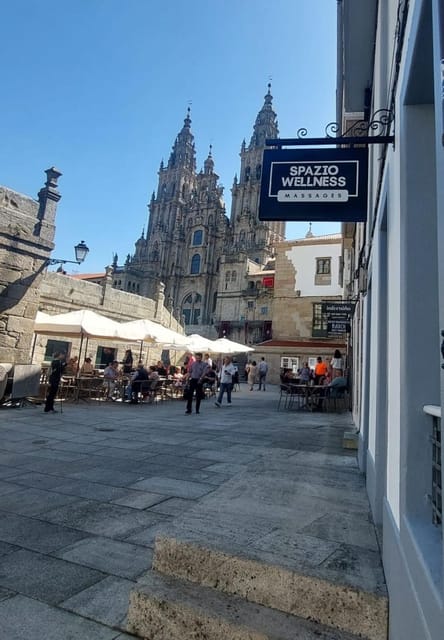
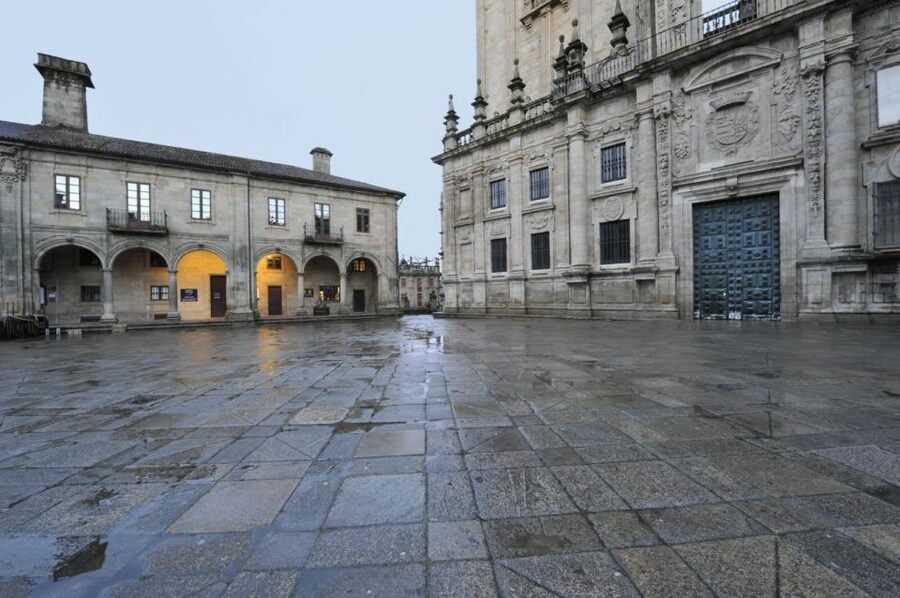
The meeting point is easy to place on a map: go to the bottom of the stairs at Plaza del Obradoiro, directly in front of Santiago Cathedral’s main facade. This is one of the simplest central meeting points in Santiago, especially if you have just arrived in the square after completing your route.
The entrance itself may require a little patience. One person described being met at the front of a locked building and then taken around to a lower-level door. Another nearly mistook the waiting area for an art gallery while looking for the clinic entrance.
That does not appear to affect the treatment, but it is useful to know before you arrive. If the door is not obvious, do not assume you are in the wrong place. Check the meeting instructions and wait for the host or therapist.
The central location works well after a cathedral visit, a pilgrim’s meal, or a short walk through the old town. You do not need transport, and bicycle parking is included if you have been cycling rather than walking.
Choosing between 30, 60, and 90 minutes
You can select a 30, 60, or 90-minute treatment. The overall activity takes about one to one and a half hours, depending on the option selected and the time needed to get settled.
A 30-minute session is best for a narrow goal. Choose it if your feet are the main problem, or if you want quick attention to one area such as your calves, neck, or shoulders. It is also a reasonable choice if your schedule is tight.
The 60-minute option gives you enough time for a more balanced treatment. You can ask for work on several areas instead of choosing between your legs and upper body. For many people, this is the practical middle ground.
The 90-minute treatment makes the most sense after a long Camino or a particularly demanding route. It gives the therapist more time to work carefully rather than rushing from one sore area to the next. Two people who arrived after walking the Camino upgraded to 90-minute sessions and were glad they had the extra time.
At $71 per person, the price is strongest when you choose a longer treatment and need real recovery. It is not the cheapest possible massage in Spain, but the private booth, central location, supplies, water, and treatment choice add value. If your only goal is a brief foot massage, the shorter option may be enough. If your entire body feels used up, the longer session is easier to justify.
What happens during the treatment
You begin by meeting near the cathedral and entering the treatment space. The booth is private, and towels, oils, and creams are provided. The treatment room has been described as clean and comfortable, with plush massage beds, suitable lighting, a comfortable temperature, and background music.
One detail may matter if you have spent a week sleeping in unfamiliar beds: the massage table has an opening for your face built into the bed rather than a separate face cradle. One person found this especially comfortable.
Before the massage, you should be ready to mention injuries, tender spots, or areas that need lighter pressure. This matters after the Camino. Your calves may be tired rather than simply tight, and a pressure level that feels good on your back may be too much for your legs.
The treatment can then follow the option you selected. A stimulating session works across the body with oils and creams. An unloading treatment uses slow, deep movements to support muscle recovery. A relaxing treatment places more attention on easing physical and mental tension.
You can also choose reflexology for the feet. That is a useful choice if your legs are generally fine but your soles still feel battered by long hours on pavement and trail.
The aim is not to diagnose a medical problem. It is a wellness treatment designed to help you relax, recover, and feel more comfortable after exertion. If you have a serious injury, make that clear before treatment and seek medical care when needed.
Same calm, a different treatment:
- Córdoba: Hammam Al Ándalus Entry Ticket w/Optional Massage
★ 4.8 · 659 reviews - Adeje: Aqua Club Thermal Spa Entry Ticket
★ 4.4 · 631 reviews - From Malaga: Hammam Bath, Kessa and Relaxing Massage Tour
★ 4.7 · 463 reviews - Granada: Hammam Experience with Massage at Baños de Elvira
★ 4.7 · 455 reviews
The strongest part: recovery for tired legs and feet
The most praised feature of this experience is its usefulness after long-distance walking. People who had walked five days, completed the Camino Inglés, or covered roughly 300 to 310 kilometers described the treatment as exactly what their bodies needed.
That pattern makes sense. Long walking can leave you with several different problems at once: sore soles, tight calves, stiff hips, a tired lower back, and tension through the neck from carrying a pack. A treatment that lets you direct attention to those areas is more useful than a generic spa session.
Foot reflexology is particularly suited to the Camino setting. It does not replace rest, hydration, or proper care for blisters, but it gives your feet focused attention after repeated impact. If your legs feel refreshed but your feet remain tender, ask about this option.
The unloading treatment may suit you if muscle recovery is your main concern. Its slow, deep movements are intended to work through tired muscles, but deep pressure is not automatically better. Tell the therapist if your calves are sensitive. One person had to ask for lighter pressure on Camino-used calves, while a companion found the massage ideal.
That contrast is a useful reminder: communicate during the session. The same technique can feel therapeutic to one person and too strong to another.
A calm room and attentive therapists
The physical setting helps the treatment do its job. A warm, quiet room with low lighting and background music gives you a clean break from Santiago’s busy central square.
The treatment beds receive especially strong praise for being plush and comfortable. That may sound minor, but a hard or narrow table can make a sore back feel worse. The built-in face opening is another thoughtful touch for anyone who dislikes pressing their face into a separate cradle.
The staff style also receives positive attention. Sandra is described as attentive and skilled, while Daniel is noted for a calm manner and soothing tone. The exact therapist depends on availability, but the experience is designed around personal attention rather than a large shared room.
English and Spanish are available. That is helpful when you need to explain pressure, an injury, or a particular area that needs care. You should still speak up during the massage instead of assuming the therapist can read your reaction.
Timing your appointment in Santiago
The best time depends on what you want from the session.
Booking for the day after arrival gives your body time to come down from the route. This is a good choice if you want to attend the cathedral, collect your Compostela, eat a proper meal, and then schedule recovery once the excitement settles.
A same-day appointment can work well if you finish your walk early and want immediate relief. Just remember that the Camino finish can involve waiting, walking across the city, and handling bags. Leave enough time so you do not arrive rushed.
A morning appointment can also be useful after completing the route the previous day. One person booked for the morning after finishing the Camino and found that timing particularly effective. You may feel stiff when you wake up, and a treatment can set a more comfortable pace for the rest of the day.
The activity lasts one to one and a half hours overall, with treatment lengths of 30, 60, or 90 minutes. Check the available start times before booking, especially during busy pilgrimage periods.
What is included and what you still need to plan
The practical inclusions are straightforward:
- Your selected 30, 60, or 90-minute treatment
- Towels
- Oils and creams
- A private massage booth
- Water
- Wi-Fi
- Bicycle parking
You will need to arrange your own way to the central meeting point and decide which treatment suits your body. The activity does not include transport, meals, accommodation, or medical assessment.
The private-group format is useful for couples or friends who want to book around the same time. Two people can arrange treatments together, although the supplied details do not promise simultaneous treatment or a specific number of therapists. Confirm the arrangement if that timing matters to you.
Is $71 per person good value?
The answer depends on your treatment length and your condition after walking.
For a short 30-minute session, $71 is a higher price than a basic local massage might be. You are paying partly for the central cathedral location, private setting, included supplies, and a booking arrangement that fits neatly into a Santiago visit.
For 60 or 90 minutes, the value improves. A long treatment gives you time to address more than one sore area, and it avoids the frustration of having to choose between your feet, calves, shoulders, and back. After a multi-day Camino, that extra time can be more useful than another casual activity.
The experience also has a clear purpose. You are not paying for a generic luxury add-on. You are booking recovery after sustained physical effort. If your body feels fine and you simply want to try a massage, the cost may be harder to defend. If you have finished a demanding route, the price is easier to see as part of the Camino budget.
Free cancellation up to 24 hours before the appointment and the option to reserve now and pay later add flexibility. Those terms matter when your walking schedule can change because of weather, fatigue, or delayed arrival.
Who should book this treatment?
I would recommend it most strongly to:
- Pilgrims finishing the Camino de Santiago
- People with sore feet, calves, shoulders, or backs after several days of walking
- Anyone who wants a quiet recovery period near the cathedral
- Couples or friends seeking private treatment arrangements
- Cyclists who want a central appointment with bicycle parking
- Visitors who prefer choosing between relaxing, stimulating, recovery-focused, and foot treatments
You may want to think twice if you need treatment for a serious injury or medical condition. This is a wellness massage, not a substitute for professional medical care.
It is also not the right pick if you want a group activity, a sightseeing tour, or a long spa circuit. The appeal is simple: private hands-on treatment in a central Santiago location.
Should you book the Santiago massage?
Yes, if you have just finished the Camino and your legs, feet, or back need attention. The private room, comfortable beds, helpful treatment choices, and easy cathedral-side location make this a practical recovery stop rather than a vague luxury extra.
Choose reflexology for tired feet, unloading massage for overworked muscles, or a relaxing treatment if stress is still sitting in your shoulders. I would favor 60 minutes for a general recovery session and 90 minutes after a very long route.
The main caution is the entrance. Allow a few extra minutes and expect that the lower-level clinic door may not be obvious. Once inside, the treatment itself is the reason to book, especially if your Camino has left you walking like a wooden pilgrim statue.
FAQ
Where is the massage meeting point?
Meet at the bottom of the stairs in Plaza del Obradoiro, directly in front of the main facade of Santiago Cathedral.
How long does the activity last?
The overall activity takes about one to one and a half hours. The treatment itself can be 30, 60, or 90 minutes, depending on the option selected.
How much does the massage cost?
The listed price is $71 per person.
Which massage treatments are available?
You can choose a stimulating full-body massage using oils and creams, an unloading massage for muscle recovery, a relaxing massage, or foot reflexology.
Is foot reflexology suitable after the Camino?
Yes. The treatment uses stimulation of specific points on the feet and can be a useful choice after several days of trekking.
Are towels and massage products included?
Yes. Towels, oils, and creams are included.
Is the treatment private?
Yes. The experience takes place in a private massage booth and is offered for a private group.
What languages are available?
The instructor and staff offer Spanish and English.
Can I cancel the booking?
You can cancel up to 24 hours in advance for a full refund. You can also reserve now and pay later, which keeps your plans flexible.
New spa and massage finds around Spain
- Alicante: Fluid Art-Therapy Workshop&Wine★ 4.9 · 29 reviews
- 25 Minute Couples Massage with Spa Access★ 4.5 · 37 reviews
- Couple Massage: 1 hour★ 5.0 · 39 reviews
- Relaxing back massage & day SPA★ 5.0 · 44 reviews
- Granada: Thermal Spa Circuit with Optional Massage★ 4.3 · 45 reviews
- 60 min Balinese Massage at THAI SPA MASSAGE BARCELONA★ 5.0 · 46 reviews
- Tenerife: Beer Spa Experience with Tastings and Snacks★ 4.9 · 53 reviews
- Relaxing back massage & day SPA Eurotel Punta Rotja★ 5.0 · 51 reviews
Other Spain Massage and Spa worth a look.
Malaga: Hammam Al Ándalus Entry Ticket with Massage
Read our review →
Palma: Hammam Al Àndalus Bath Session with Massage Options
Read our review →
Córdoba: Hammam Al Ándalus Entry Ticket w/Optional Massage
Read our review →
From Malaga: Hammam Bath, Kessa and Relaxing Massage Tour
Read our review →
Granada: Hammam Experience with Massage at Baños de Elvira
Read our review →
Sailing Adventure: Sailing, Dolphins and Relaxation with Drinks
Read our review →Lists this treatment appears on