Review · TEL AVIV
Jerusalem & Dead Sea Private Tour – Visit Holy Jerusalem & Dead Sea Relaxation
Jerusalem’s sacred core and the Dead Sea make an odd but effective pairing: one is crowded, intense, and layered with faith; the other is quiet, hot, and wonderfully strange. This private day tour lets you cover both without changing hotels or working out the transport yourself.
I like the private guide and vehicle, since the day can be shaped around your group and the guide can explain Jewish, Christian, and modern Israeli history as you move through the city. I also like the contrast between the stone lanes of Jerusalem and the floating experience at the Dead Sea. The main drawback is time. Trying to see this much in one day means Jerusalem will feel like a strong introduction rather than a full study.
Key points to know before booking
- The Mount of Olives gives you the essential Jerusalem view: Begin above the Old City, where the Temple Mount and historic walls spread below you.
- The Old City portion is mostly on foot: Expect narrow lanes, stone paving, religious sites, and a busy schedule over several hours.
- The tour covers three faith traditions: Mount Zion, the Via Dolorosa, the Church of the Holy Sepulchre, and the Western Wall each offer a different view of Jerusalem.
- The Dead Sea is a real change of pace: You get about two hours at a shore resort for floating and optional mud treatment.
- Guide quality matters here: Guides named in the supplied experiences include Enrique, Saul, and Benjamin, with special praise for clear history, humor, punctuality, and careful timing.
- Check the entrance-fee wording before you pay: The highlights say entrance fees are included, while the detailed inclusions list says they are not.
Why this Jerusalem and Dead Sea combination works
If you have only one free day from Tel Aviv or Herzliya, this tour solves a practical problem. Jerusalem and the Dead Sea are two of Israel’s major sights, but they call for different kinds of visits. Jerusalem rewards patience and close attention. The Dead Sea asks very little of you beyond getting into the water and enjoying the odd sensation of floating.
The private format is especially useful for this route. You are not waiting for a large group at every corner, and the vehicle is air-conditioned for the long road sections. Pickup and drop-off at your hotel are included, which removes one of the day’s biggest chores.
The pace is still demanding. The supplied information gives a duration of roughly eight to eleven hours, while the overview describes a twelve-hour day. Treat this as a full-day outing. You will walk through the Old City, climb or descend over uneven stone, visit active religious sites, and then travel to the Dead Sea. Comfortable shoes, a hat, sunscreen, sunglasses, and water-friendly clothing are sensible choices.
More places to be looked after around the world:
- Budapest: Széchenyi Spa Day Ticket with Optional Upgrades
★ 4.3 · 23,911 reviews - Reykjavik: Sky Lagoon Entrance Pass With 7-Step Spa Ritual
★ 4.8 · 6,166 reviews - Prague: Bernard Beer Spa with Beer and Massage Option
★ 4.8 · 4,164 reviews
Starting above the Old City at Mount of Olives
The Mount of Olives is a smart first stop because it gives you your bearings before you enter Jerusalem’s maze. From the slope, you look across the Kidron Valley toward the Old City and the Temple Mount. The view helps you understand the city’s shape, its steep terrain, and the close relationship between Jerusalem and the Judean Desert.
This is also a place where religious meaning is central. Christian tradition connects the Mount of Olives with Jesus’ entry into Jerusalem, his weeping over the city, and his ascension. Jewish history is present here too, especially in the long slope of burial grounds below the summit.
You get about thirty minutes, so expect a panoramic introduction rather than a long walk. Bring your camera, but listen closely to the guide’s orientation. A good explanation here will make the rest of the morning easier to follow.
Gethsemane and the weight of tradition
At the foot of the Mount of Olives, the Garden of Gethsemane gives the tour a quieter pause. The garden is associated with Jesus’ prayer and arrest before the crucifixion. Several small olive groves near churches are identified with biblical Gethsemane, so the site is best understood through tradition, worship, and setting rather than through one clearly defined patch of ground.
You have around thirty minutes here. That is enough to see the olive trees and absorb the atmosphere, though not enough for a long, unhurried church visit. Modest clothing matters. Jerusalem’s sacred places have different customs, and respectful dress will make the day easier.
Mount Zion links Jewish and Christian Jerusalem
The hour at Mount Zion brings two major traditions together. You visit the Tomb of King David and the Room of the Last Supper, also called the Cenacle. The tomb is deeply sacred in Judaism, although there is no certainty that it is the actual burial place of King David. That distinction is worth hearing, since Jerusalem is full of sites where faith, memory, and archaeology do not always match neatly.
The upper room is linked by Christian tradition to the Last Supper. The building has also passed through different periods and uses, which adds to the sense that Jerusalem’s holy places are not frozen in one era.
I like this stop because it gives your guide room to compare traditions instead of presenting the city as a single-story religious monument. The visit is free according to the stop details, but crowd levels and access can affect how long you spend inside.
Same calm, a different treatment:
- Body Massage Experience in Ubud Traditional Spa
★ 5.0 · 3,506 reviews - Budapest: Full-Day Gellért Spa Ticket
★ 4.2 · 3,340 reviews - Istanbul: Private Turkish Bath, Massage, and Spa in Old City
★ 4.6 · 3,225 reviews - Marrakech: Spa Massage and Steam Hammam with Pickup
★ 4.6 · 2,873 reviews
Walking the Via Dolorosa
The Old City section is the heart of the day. You enter the Christian Quarter and follow portions of the Via Dolorosa, the processional route associated with Jesus’ final walk to crucifixion. The lane is narrow and paved with stone. Shops, shrines, church entrances, and ordinary city life share the same space.
The route is not a quiet museum path. You might find people praying, carrying religious objects, selling souvenirs, or simply going about their day. That mixture is part of the experience. It can also make the walk feel crowded and less solemn than you expect.
Two hours are assigned to the Via Dolorosa and the Church of the Holy Sepulchre together. Wear shoes with good grip and do not expect a flat, easy stroll. The value of a private guide is clear here. A guide can point out the route’s stations, explain the traditions, and keep your group moving without turning the walk into a blur.
Inside the Church of the Holy Sepulchre
The Church of the Holy Sepulchre is the most important Christian site on this route. It is associated with the crucifixion, burial, and resurrection of Jesus. Within the church, the places linked with Calvary and the tomb carry enormous meaning for Christian pilgrims.
The church can feel visually and emotionally dense. Several Christian communities share responsibility for different sections, and worship takes place alongside sightseeing. You may need patience at the most important points, especially if services or prayer groups are active.
Your guide can supply the historical and religious framework, but allow yourself a moment to look rather than rushing from explanation to explanation. This is one of the places where the schedule may feel tight. If the church is particularly busy, you may need to accept a shorter visit elsewhere.
The Cardo reveals Roman and Byzantine Jerusalem
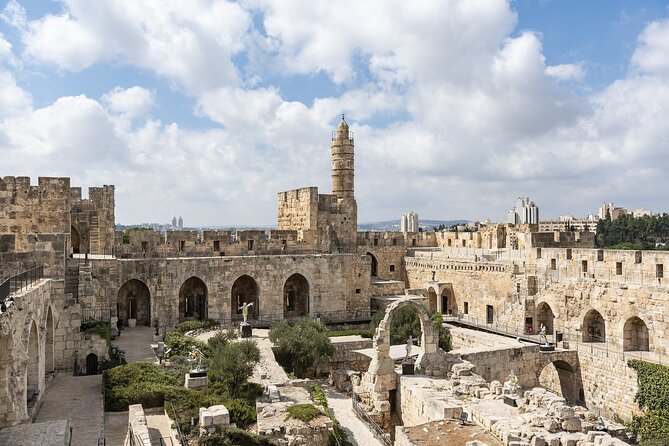
From the Christian Quarter, the walk continues through the Armenian and Jewish quarters to the restored Cardo. This ancient street once formed part of the Roman and Byzantine city. The southern section found in the Jewish Quarter dates to the reign of Emperor Justinian, from 527 to 565, and helped connect major churches, including the Holy Sepulchre and the Nea Church.
The Cardo offers a welcome change from the religious intensity of the morning. Here, the city’s past appears through street planning, columns, and excavated remains. It helps you picture Jerusalem as a working Roman and Byzantine city, not only as a collection of holy sites.
The scheduled half-hour is enough for an explanation and a look at the excavated section. It is not a full archaeology visit, but it adds useful historical balance to the day.
The Western Wall and the Temple Mount
The final major Jerusalem stop is the Western Wall, also called the Kotel. It is part of the ancient retaining wall around the Temple Mount and is the holiest place where Jewish prayer is permitted close to the mount itself.
The wall’s importance is not simply its visible height or length. Its meaning comes from its connection to the Temple Mount, the center of Jewish religious memory. You will see people praying, placing notes in the stones, and approaching the prayer areas with care.
You get about thirty minutes. That is enough to view the wall and understand its role, but the visit may feel brief if you want to sit and observe. Dress modestly and follow local instructions. Men and women may use separate prayer areas, and religious practice should be treated with respect even if you are visiting as a sightseer.
The road to the Dead Sea
After Jerusalem, the mood changes as you travel through the Judean hills toward the Dead Sea. The road section is part of the reason this tour works best with a private vehicle. You can rest in the air-conditioned car instead of managing connections after a tiring Old City walk.
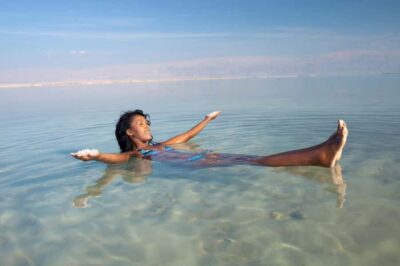
The Dead Sea sits in the Jordan Rift Valley between Jordan and the West Bank. It is the lowest place on earth, and its very salty water creates the famous floating sensation. The water is not like an ordinary beach swim. You sit back, keep your face away from the water, and let the salt hold you up.
You have about two hours at a shore resort. That is enough time to float, wash off, and try the mineral mud if you choose. The mud is part of the classic Dead Sea experience and is described as an optional health-oriented treatment. It is best to regard it as a pleasant ritual rather than a medical cure.
Bring a towel, swimsuit, sunscreen, and sunglasses. The supplied advice specifically calls for a towel, hat, sunglasses, and sunscreen. Avoid shaving immediately before entering salt water, since even small cuts may sting, though that practical point is not part of the supplied tour information and should be treated as general preparation rather than a promised feature.
The Dead Sea stop is relaxing, but it is not a long beach holiday. You will be returning to your pickup point the same day, so use the time well. Float first, then try the mud, rinse off, and leave enough time to change before the return drive.
The guides make or break a packed day
The strongest feedback centers on the guides. Enrique is described as funny, thoughtful, and strong on history and theology. Saul is praised for clear explanations, careful control of the schedule, punctuality, and a warm manner. Benjamin is described as a reliable driver who was prompt, kind, and able to help organize added activities for a group.
You should not assume a particular guide unless the operator confirms it for your date. Still, these names give you a useful sense of the service style to request: a guide who can explain all three religious traditions, handle the walking pace, and adjust the order when lines or crowding make that sensible.
Several experiences also describe careful timing and help avoiding long waits. That matters on a day this full. Ask at booking who will guide you, what language the tour will use, and how the company handles the entrance-fee contradiction.
Is $220 per person good value?
At $220 per person, this is not the cheapest way to see Jerusalem and the Dead Sea. You are paying for a private experience, hotel pickup and drop-off, a licensed guide, and an air-conditioned vehicle. For a family or small group, that can be fair value because the cost buys convenience and personal attention rather than simply a seat on a bus.
The value is strongest if you have only one day, dislike organizing transport, or want detailed explanations at religious sites. It is weaker if you prefer to spend half a day at the Western Wall or wander the Old City without a clock.
The listed information says all entrance fees are included in one place, but the detailed inclusion section says entrance fees are not included. That is an important point to settle before booking. Food, drinks, and personal expenses are not included.
Free cancellation is available if you cancel at least 24 hours before the start time. Changes or cancellations made inside that window are not accepted for a refund.
Who should book this day trip?
I would choose this tour if you are staying in Tel Aviv or Herzliya and want a strong first look at Jerusalem without giving up the Dead Sea. It suits families, couples, and small groups that value a private vehicle and direct access to a guide.
It is also a good match for visitors with a strong interest in biblical sites. The route covers major Christian, Jewish, and historical locations, and the guide names associated with the service suggest that theology and history are important parts of the commentary.
I would hesitate if you want a slow Jerusalem visit, have mobility concerns with uneven stone streets, or dislike long days. Most people can participate, but the Old City portion involves substantial walking, and the day may run eight to twelve hours depending on the schedule.
Should you book the Jerusalem and Dead Sea tour?
Book it if your priority is coverage: Mount of Olives views, Gethsemane, Mount Zion, the Via Dolorosa, Holy Sepulchre, Cardo, Western Wall, and a Dead Sea float in one organized day. The private setup, hotel pickup, air-conditioned vehicle, and strong emphasis on guide quality make the high price easier to understand.
Skip it if you can spare separate days. Jerusalem deserves more time, and the Dead Sea is more enjoyable when you are not watching the clock after a demanding morning.
Before paying, confirm the guide’s name, pickup location, exact duration, and entrance-fee policy. If those details suit you, this is an efficient and meaningful introduction to two very different sides of Israel.
FAQ
How long does the Jerusalem and Dead Sea tour last?
The supplied duration is approximately eight to eleven hours, while the tour overview describes a twelve-hour day. You should plan for a full-day outing.
Where does the tour depart from?
The experience is based in the Tel Aviv area and offers hotel pickup and drop-off. The overview also refers to departure from Herzliya, so confirm that your hotel is within the available pickup area.
Is this a private tour?
Yes. Only your group participates, and transportation is provided in an air-conditioned vehicle with a government-licensed professional guide.
Which places in Jerusalem are visited?
The route includes the Mount of Olives, Garden of Gethsemane, Mount Zion, King David’s Tomb, the Room of the Last Supper, the Via Dolorosa, the Church of the Holy Sepulchre, the Cardo, and the Western Wall.
What happens at the Dead Sea?
You stop at a Dead Sea resort for about two hours. You can float in the salty water and use the mineral-rich Dead Sea mud as an optional activity.
What should I bring and wear?
Bring comfortable walking shoes, a hat, towel, sunglasses, and sunscreen. Modest clothing and a head covering are required when visiting Jerusalem’s holy sites. Food, drinks, and personal expenses are not included.
New spa and massage finds around the world
- Bari, Wellness massage, from the feet to the face at studio★ 5.0 · 2 reviews
- Bath: Virtual Reality Spa and Meditation Journey★ 5.0 · 4 reviews
- BEER SPA Niedermorschwihr★ 5.0 · 5 reviews
- Bangkok: Let’s Relax Spa Terminal 21 E-Voucher★ 5.0 · 2 reviews
- Bansko: Easy snowshoeing Pirin National Park & thermal spa★ 4.1 · 19 reviews
- Bangkok: Urban Calm Spa E-Voucher★ 3.6 · 6 reviews
- Bangkok: Spa Experience at Oasis Spa★ 4.7 · 14 reviews
- Bangkok: Mind n Matter Massage Spa E-Voucher★ 5.0 · 5 reviews
Other Tel Aviv Massage and Spa worth a look.