
Review · TOKYO
Tokyo Ikebana Wellness Art Experience near Shinjuku
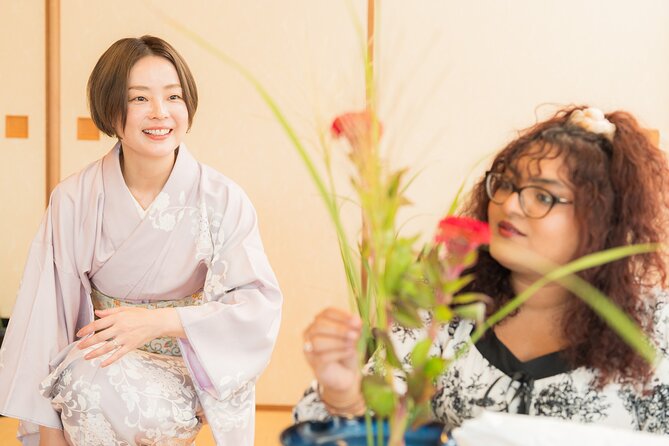
The most appealing part of this experience is its balance of Japanese tradition and personal expression. You learn why ikebana looks the way it does, then use seasonal flowers, branches, leaves, and space to make an arrangement that feels like your own. Instructor Ai teaches in English and guides beginners with patience.
I like the small maximum group of five, which gives you time for individual advice. I also like that your finished flowers go back to your hotel or home with you, rather than disappearing into a workshop bin. The main consideration is the strict non-refundable policy, so book only when your plans are firm.
Key points to know before booking
- A true beginner workshop: You need no previous flower-arranging experience, and the basic steps are explained clearly.
- Instructor Ai teaches in English: You receive personal help with cutting, balance, branch direction, and placement.
- A calm Japanese-style setting: The bright, attractive room is part of the cultural experience, not just a place to work.
- Seasonal flowers shape each session: The materials change the mood and give you a different creative challenge.
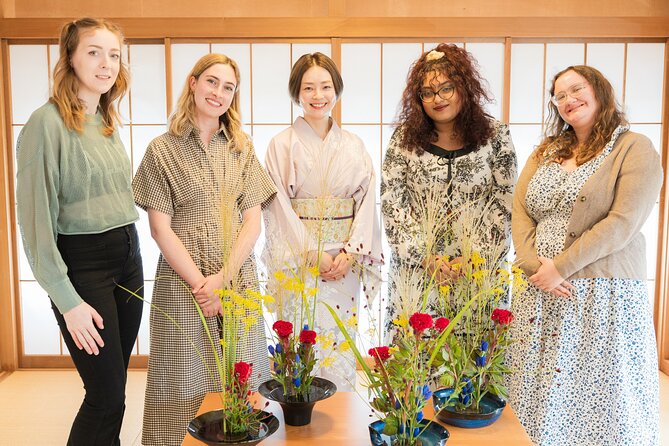
- Maximum five participants: The small group allows the teacher to adjust advice to your arrangement.
- You take the flowers with you: Your work can decorate your hotel room during your stay.
Why this 90-minute ikebana session feels different
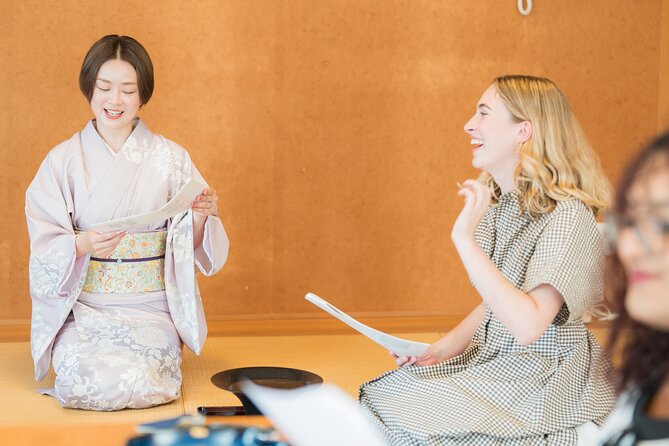
Many Tokyo activities give you a quick look at Japanese culture. This one asks you to slow down and make something with your hands. That changes the pace of your day. Instead of simply viewing an object, you consider the line of a branch, the angle of a leaf, the height of a flower, and the empty space around it.
Ikebana is more than putting flowers in a vase. The workshop introduces a Japanese art form with about 600 years of history, then brings it down to a level that feels manageable for a first attempt. You do not need to know the formal rules before arriving. Ai explains the basics, demonstrates the process, and helps you make decisions as you work.
The format is especially useful if you have always liked the look of ikebana but assumed it was too formal or difficult. Several activities in Japan let you watch a demonstration. Here, you create your own piece, make mistakes, adjust it, and see how one small change can alter the whole arrangement.
More places to be looked after around the world:
- Budapest: Széchenyi Spa Day Ticket with Optional Upgrades
★ 4.3 · 23,911 reviews - Reykjavik: Sky Lagoon Entrance Pass With 7-Step Spa Ritual
★ 4.8 · 6,166 reviews - Prague: Bernard Beer Spa with Beer and Massage Option
★ 4.8 · 4,164 reviews
Arriving in Nakano, not central Shinjuku
The meeting point is in Nakano City at Japan, 164-0001 Tokyo, Nakano, 3-chōme 8, M Square. The experience is described as being near public transportation, but the supplied details do not name a specific station or give walking directions. Check the exact map pin after booking and allow time to find the building.
The title refers to the Shinjuku area, but the stated address is in Nakano. That distinction matters when you plan your afternoon. Do not assume you can walk from a hotel in central Shinjuku. Use your navigation app and confirm the route before leaving.
The scheduled start is 1:00 pm. The activity lasts about 1 hour and 30 minutes and ends at the same meeting point. That makes it easy to pair with another Tokyo plan, but I would avoid scheduling a major timed attraction immediately afterward. Finding the building, settling in, and lingering over your finished flowers may take a little extra time.
A mobile ticket keeps the booking simple. Confirmation is provided when you book. If you are already in Japan, you do not need to provide a passport number or flight information. If the booking form requests those details, enter N/A.
The opening lesson: history, tools, and Japanese aesthetics
The session begins with an introduction to ikebana and its cultural background. You learn about the art’s long development, the main styles, flower vases, tools, and the basic way an arrangement is built. Ai also shows photographs of her own work, giving you a visual idea of the range possible within the form.
This opening is not wasted lecture time. It helps you understand why a simple-looking arrangement may take thought. Height, direction, proportion, color, and empty space all matter. The lessons also give you a way to look at your own finished work with more understanding.
The teaching style is designed for first-timers. Beginners receive explanations of the flowers used that day and guidance on handling them. You may also learn how flowers behave, how branches point, and how cutting or removing a leaf can change the appearance.
The cultural background adds value to the price. You are not just paying for materials and a craft activity. You are getting a short introduction to a traditional Japanese practice, followed by time to try its ideas yourself.
Choosing your flowers and building the arrangement
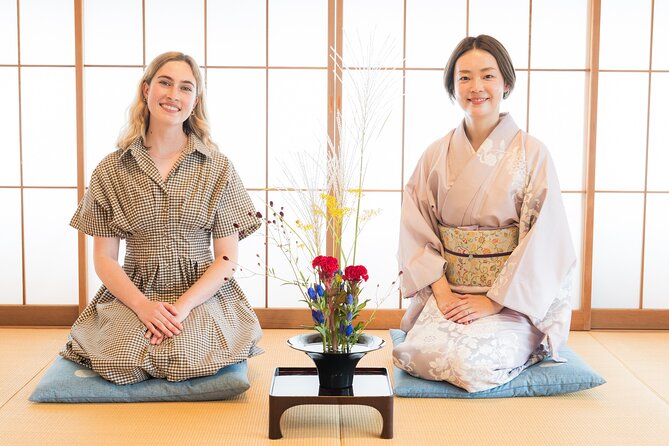
After the introduction, you begin the practical part. The exact flowers vary by season, so your experience will not be identical to someone attending at another time of year. That seasonal element is part of the appeal. You work with the flowers available at that moment, rather than with a fixed kit.
You receive step-by-step help as you arrange the materials. The process may include deciding which flower should attract attention, setting the height of branches, turning leaves, and judging the open areas around the display. Ai offers advice without forcing every arrangement into the same shape.
That freedom is important. The session includes basic principles, but the goal is not to produce five identical pieces. The same number of flowers can create very different results depending on how each person sees line, balance, and space. You can bring your own idea to the work while still receiving enough structure to avoid feeling lost.
The tools require care, but you are not expected to arrive with special skill. Participants with no experience have been able to learn the correct use of the scissors and flower materials through direct instruction. If you feel uncertain, ask Ai to look at the arrangement before making a major cut. Once a stem is shortened, it cannot be put back.
Same calm, a different treatment:
- Body Massage Experience in Ubud Traditional Spa
★ 5.0 · 3,506 reviews - Budapest: Full-Day Gellért Spa Ticket
★ 4.2 · 3,340 reviews - Istanbul: Private Turkish Bath, Massage, and Spa in Old City
★ 4.6 · 3,225 reviews - Marrakech: Spa Massage and Steam Hammam with Pickup
★ 4.6 · 2,873 reviews
Personal guidance in a group of no more than five
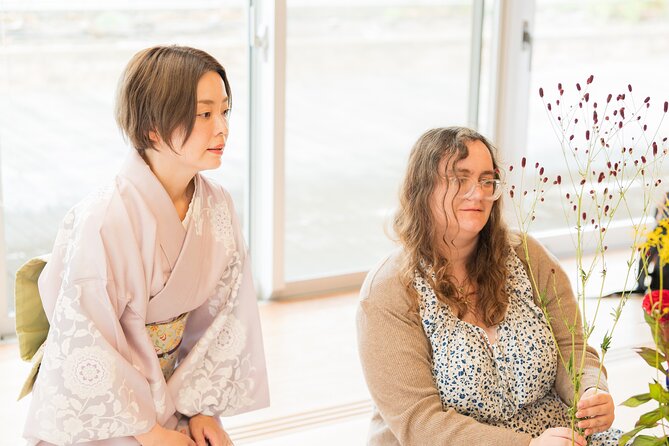
The maximum group size is five people. That is a useful detail for anyone comparing this with a large class. You are not left watching a demonstration from the back of a crowded room. Ai can move between participants, check the direction of a branch, and suggest a small adjustment.
The personal attention also makes the session suitable for families, friends, and colleagues. The activity is open to people of all ages, and the format does not require you to arrive already interested in formal Japanese arts. Men and first-time participants have also found the process approachable.
If you attend with friends, the group setting gives you something interesting to compare. You can use the same flowers and still produce arrangements with different moods. That contrast helps show the personal side of ikebana without turning the class into a competition.
The teacher’s manner is a major part of the experience. Ai is described as gentle, clear, and willing to work at each participant’s pace. That matters because a beginner can easily worry about cutting the wrong stem or making an arrangement that looks awkward. Calm correction is more helpful than a long list of strict rules.
The Japanese-style room and the quiet pace
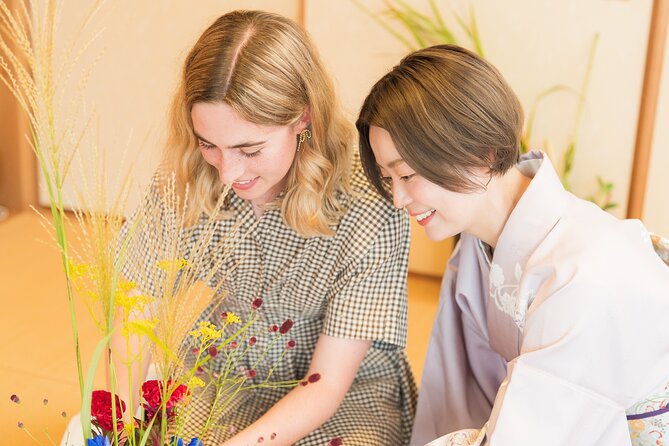
The setting contributes to the sense of occasion. The workshop takes place in a clean, bright Japanese-style room, and the room itself helps separate the activity from the noise of ordinary sightseeing. You sit with the flowers, tools, and arrangement in front of you, with time to look carefully.
Do not expect an elaborate temple visit or a full-day cultural program. This is a small indoor workshop. Its strength is concentration, not spectacle. You spend most of the 90 minutes learning and creating rather than moving between sights.
That quiet pace can be a welcome change after crowded streets, shopping, and train connections. The activity has a gentle wellness quality, but it is still a practical art lesson. You leave with a better sense of how to place flowers, not just with a vague feeling of relaxation.
The room may also appeal to anyone who enjoys Japanese interiors, traditional arts, or photography. Still, the supplied information does not promise a formal tea ceremony, a meal, or a wider tour of the neighborhood. Book it for ikebana, not for a general sightseeing program.
Taking your flowers back to your hotel
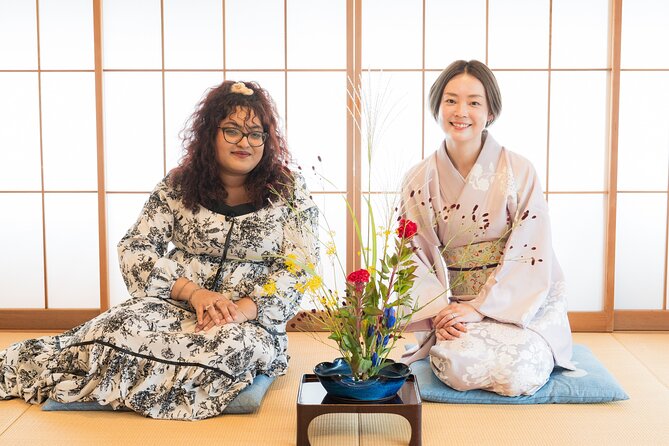
At the end, you can take your arrangement with you. During a Tokyo stay, that might mean placing it in your hotel room and enjoying it for the rest of your visit. The take-home element gives the 90-minute session a longer life than many short activities.
You also gain a practical lesson in seeing flowers differently. A branch that looked uneven at first may become the main line of the piece. A leaf that seemed unimportant may hide a useful angle or create too much weight. The process encourages you to look at each stem as an individual form.
The arrangement will naturally be delicate. You should plan how to carry it after the workshop and avoid treating it like a souvenir you can pack into a suitcase without thought. The supplied details do not specify packaging or a special container, so bring a little care and flexibility into your plans.
If you are staying in Japan for several days, the flowers can become a small part of your trip rather than an object that immediately goes into luggage. If you are flying home soon, consider how you will handle them before booking.
Is $52.71 a fair price?
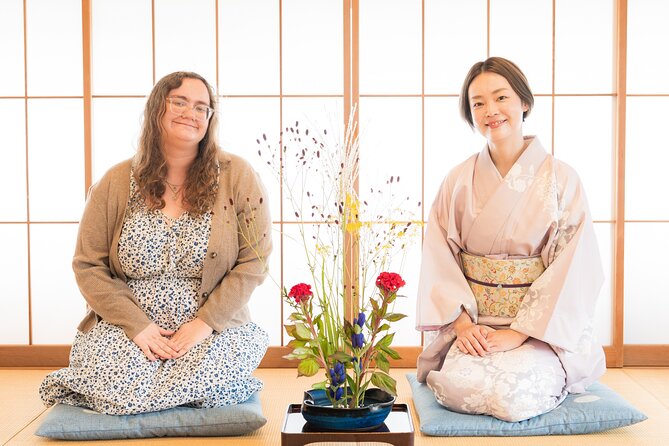
At $52.71 per person, this is not the cheapest hands-on activity in Tokyo. The value depends on what you want from a cultural experience. You receive about 90 minutes of instruction, flowers and materials for your arrangement, cultural background, personal help, and a finished piece to take away.
The maximum of five makes the price easier to justify than a large, impersonal class. You are paying for access to the teacher as well as for the materials. The English instruction is also useful if you want more than a silent demonstration.
I would compare the cost with a guided craft class, not with a museum admission ticket. The workshop gives you participation and a physical result. It does not provide a long tour, transport, food, or several separate activities.
Booking 22 days ahead on average suggests that you should not wait until the last moment if your schedule is fixed. The non-refundable policy is the biggest financial caution. Cancellations and amendments are not refunded for any reason, so confirm your afternoon plans and meeting point before paying.
Who will enjoy this most?
I would recommend this to you if you want a slower, more personal activity during a Tokyo visit. It suits first-time participants, couples, friends, families, colleagues, and solo visitors who enjoy learning by doing.
It is a particularly good choice for:
- Anyone interested in Japanese culture beyond major temples and shopping streets
- Beginners who assume ikebana is too formal
- People who enjoy flowers, design, or quiet creative work
- Families looking for an activity that different ages can share
- Visitors who want a small souvenir with a personal story
- Repeat Japan visitors seeking something outside the usual sightseeing route
You may want to skip it if you prefer fast-paced sightseeing, dislike careful handwork, or need a fully flexible schedule. The activity takes place at a set time, begins at 1:00 pm, and cannot be refunded after booking.
Should you book the Tokyo ikebana experience?
Book it if you want to spend part of your Tokyo day making something rather than simply looking at things. Ai’s English guidance, the group limit of five, the attractive Japanese-style room, and the take-home flowers give this short activity real substance.
I would be careful about the address. The experience is marketed near Shinjuku, but the meeting point is in Nakano City, so check the route and allow time for arrival. I would also book only after confirming that your afternoon is secure because the payment cannot be refunded or amended.
For a first encounter with ikebana, this is a friendly and focused introduction. It will not make you an expert in 90 minutes, but it can show you why the art has lasted so long, while leaving you with flowers that remind you of Tokyo after the class ends.
FAQ
Do I need previous ikebana experience?
No. The activity is designed for beginners, and no prior experience is needed. The instructor explains the history, basic principles, tools, and process before guiding you through your own arrangement.
Who teaches the workshop?
The instructor is Ai, also referred to as Ai-sensei. English guidance is available, including explanations of the flowers, cutting, balance, and arrangement.
Where does the activity begin?
It begins at Japan, 164-0001 Tokyo, Nakano City, Nakano, 3-chōme 8, M Square. It ends at the same meeting point.
What time does the workshop start and how long does it last?
The scheduled start time is 1:00 pm. The session lasts approximately 1 hour and 30 minutes.
How many people can join?
The activity has a maximum of five participants. This small group allows the instructor to give personal advice during the practical work.
Can I take my flower arrangement with me?
Yes. You can take your finished arrangement with you and enjoy it during your stay, including in your hotel room.
New spa and massage finds around the world
- Bari, Wellness massage, from the feet to the face at studio★ 5.0 · 2 reviews
- Bath: Virtual Reality Spa and Meditation Journey★ 5.0 · 4 reviews
- BEER SPA Niedermorschwihr★ 5.0 · 5 reviews
- Bangkok: Let’s Relax Spa Terminal 21 E-Voucher★ 5.0 · 2 reviews
- Bansko: Easy snowshoeing Pirin National Park & thermal spa★ 4.1 · 19 reviews
- Bangkok: Mind n Matter Massage Spa E-Voucher★ 5.0 · 5 reviews
- Bangkok: Urban Calm Spa E-Voucher★ 3.6 · 6 reviews
- Bangkok: Spa Experience at Oasis Spa★ 4.7 · 14 reviews
Other Japan Massage and Spa worth a look.
Tokyo: Japanese Massage – Kangfu Beauty & Body Care Salon
Read our review →
Osaka Temple Head Spa &Matcha Facial – Refresh & Glow〈90min〉
Read our review →
Experience Award-Winning Spa Treatments in Downtown Tokyo
Read our review →
Osaka Temple :Warm Bamboo Oil Massage – Deep Restore〈60min〉
Read our review →
Osaka: Tennen Onsen Naniwa-no-Yu, the famous hot spring spa
Read our review →
Lists this treatment appears on