
Review · CHINA
7-Day TaiChi & Qigong Wellness Retreat in China
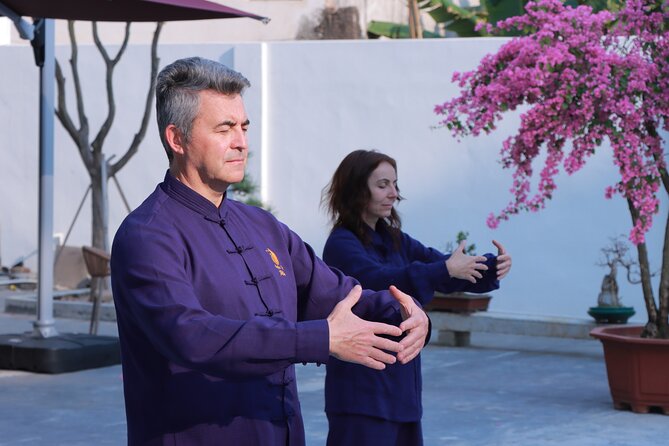
The most valuable part of this retreat is the chance to study Tai Chi and Qigong in China without needing prior experience. Master Ping and the teaching team work with beginners in English, combining movement practice with Chinese culture, breathing, meditation, and the ideas behind the forms.
I like the small maximum group of 10, which should give you more room for personal correction than a large class. I also like that lodging, three daily meals, airport pickup, and a completion certificate are included. The main caution is the price: at $100 as listed, confirm exactly what is covered and whether the displayed rate is current before booking.
Key Points
- About 20 hours of guided practice: Training covers meditation, Qigong, Tai Chi, stretching, and mindfulness.
- Master Ping teaches in English: You can ask about both technique and the philosophy behind the movements.
- Beginner-friendly curriculum: No prior experience is needed, with Eight Brocade Qigong and 10 easy Tai Chi forms included.
- Seven nights with meals: Breakfast, lunch, dinner, and accommodation are part of the package.
- A small class setting: The maximum group size is 10 people, allowing for a more personal learning experience.
- Time beyond the training room: You can use free periods to rest, explore nearby culture and nature, or continue discussions about Tai Chi and life.
Seven Days at FangYuan TaiChi Centre
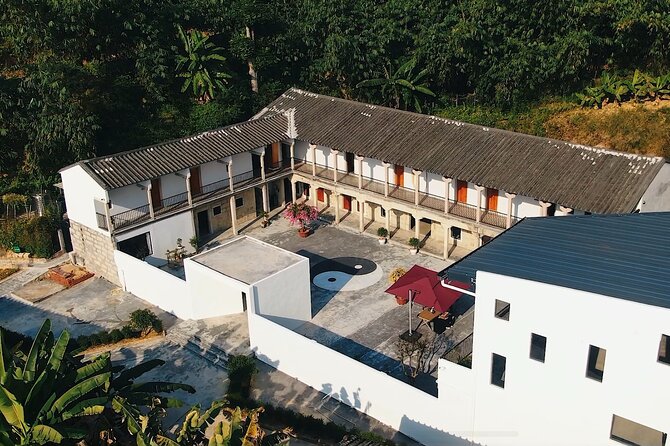
This is not a quick demonstration followed by a souvenir certificate. You spend a full week at FangYuan TaiChi Centre, with about 20 hours of personalized instruction spread across the stay. That gives you time to repeat movements, ask questions, and notice small changes in balance, breathing, and posture.
The program is designed for beginners, so you do not need a background in martial arts, meditation, or Chinese exercise. If you already practice Tai Chi, you can still find value here, especially if you want to study with a Chinese master and look more closely at the principles behind your routine.
The teaching is in English. That matters. You are not left to copy a movement from a distance and hope you have it right. The stated goal is training tailored to your needs, and the small class limit supports that approach.
More Yoga and Wellness Retreats in the world:
- Ubud: Wellness Retreat with Massage, Yoga Class, and Lunch
★ 4.8 · 93 reviews - Fah Lanna Traveler’s Retreat Spa Package in Chiang Mai
★ 4.5 · 15 reviews - Bath: Virtual Reality Spa and Meditation Journey
★ 5.0 · 4 reviews
What You Actually Learn
The course begins with an introduction to the history of Qigong and Tai Chi. This provides useful context before you start treating the movements as a simple exercise routine. Qigong is presented as an ancient Chinese practice with roots going back roughly 3,000 years, while Tai Chi is described in the program as a tradition of about 400 years.
Your physical work includes body stretching techniques, meditation, controlled breathing, and flowing movement. The emphasis is not on pushing through a hard workout. Instead, you learn to keep the body in motion while paying attention to breath, alignment, and mental focus.
Two parts of the curriculum are especially practical:
- Eight Brocade Qigong: A well-known set of exercises that can give beginners a manageable structure for daily practice.
- Ten easy Tai Chi forms: These provide a simple introduction to flowing Tai Chi movement without asking you to memorize a long and intimidating sequence.
The wording easy does not mean effortless. Tai Chi looks gentle, but slow movement demands concentration. You may spend a good deal of time refining the position of your feet, the direction of your hands, and the way your breathing matches each motion.
A Training Schedule With Room to Breathe
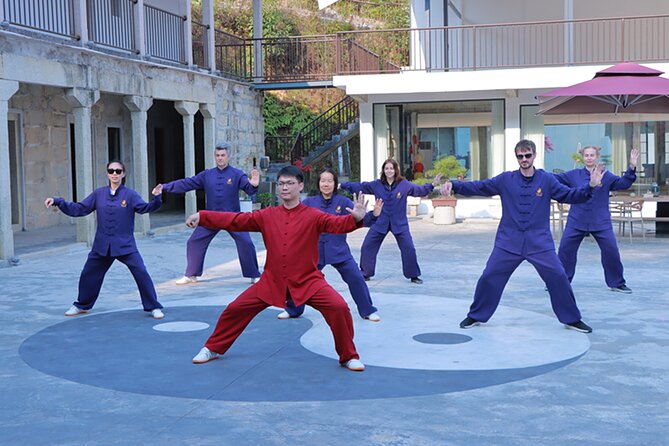
The retreat description gives a broad shape rather than a detailed hour-by-hour timetable. During the main part of the stay, you focus on training and mindfulness at the center. Free time allows you to rest, recover, and explore local attractions, culture, and nature.
That balance is one of the program’s better features. Seven days of nonstop instruction would be tiring, especially if you are new to slow movement and meditation. Time away from practice gives your body a chance to adjust and gives the lessons room to settle.
You can also use open periods for conversations with the masters and fellow students. The retreat is meant to cover more than physical technique. It encourages discussion of Tai Chi theory and the relationship between practice and everyday life.
Do not expect a sightseeing tour with a few classes added. The central purpose is study. Local exploration is a supporting feature, not a fully planned excursion program. If you want a packed schedule of attractions, this may feel too quiet. If you want a place to slow down and train, the pace should suit you well.
The Value of Learning With Master Ping
Master Ping is the central teacher named in the material, and the program also refers to award-winning, high-level masters. The descriptions of the teaching emphasize precision, authenticity, patience, and the philosophy behind the movements.
That combination is important. A short class can show you what Tai Chi looks like. A retreat can explain why a posture is held a certain way, how breathing supports it, and what to pay attention to when your body does not cooperate.
English instruction also makes the course more approachable for international participants. You can discuss form, practice, and theory without relying entirely on gestures. The center has hosted people from different countries, and the group setting can make it easy to meet others who are beginning or continuing their own practice.
The personal side of the teaching seems just as important as the formal lessons. The center is connected with Master Ping’s extended family, and the overall stay includes care from pickup through departure. That family-run quality can be a real advantage if you prefer a personal welcome over a polished resort operation.
It can also mean a less standardized experience. If you want a strict timetable, hotel-style service, or a large professional wellness complex, you may find the atmosphere more informal than expected.
More week-long retreats in the world:
- Discover Round Korea in 7days: All-Inclusive Experience
★ 5.0 · 157 reviews
Food, Lodging, and the Everyday Experience
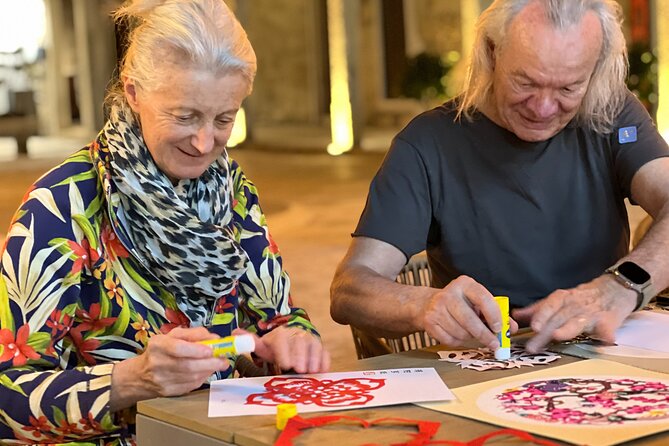
Seven nights of accommodation are included, along with breakfast, lunch, and dinner. This makes the retreat easier to manage than a class-only program, since you do not need to arrange meals around every training session.
The food is Chinese cuisine with some home comforts mixed in. That is a useful middle ground. You get a chance to eat locally while still having familiar options during a week when you may be adjusting to a new setting.
The available information does not specify room categories, private or shared rooms, or exact meal menus. Contact the center before booking if those details affect your decision. The package is clearly intended as a stay at the training center, not simply a daily class with separate hotel arrangements.
The practical advantage is simplicity. You arrive, settle in, eat at the center, and focus on your course. You do not need to spend each evening finding a restaurant or calculating transport back to your accommodation.
Getting There From Jieyang Chaoshan Airport
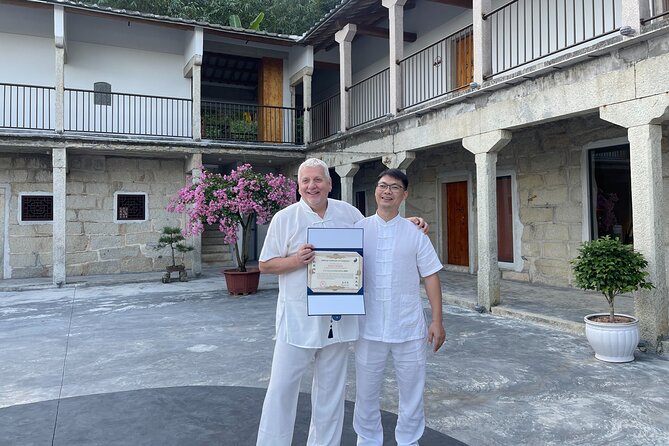
The listed starting point is Jieyang Chaoshan Airport in Rongcheng District, Jieyang, China. Pickup is offered, which is especially helpful if you are arriving in China for the first time or do not read Chinese.
Private transportation is listed as not included, so you should clarify what pickup means before you travel. The experience page identifies the airport as the meeting point but does not provide a separate private vehicle service as part of the package.
The center is described as being near public transportation. That gives you another option during free time, though the available details do not specify routes, fares, or travel times. Ask for clear arrival instructions and the exact pickup process after booking.
The operating hours are listed as 8:00 AM to 8:00 PM from Monday through Sunday for the stated availability period. Since airport arrivals can be delayed, it is wise to check how late pickup can be arranged and what happens if your flight arrives outside those hours.
What Makes the Small Group Matter
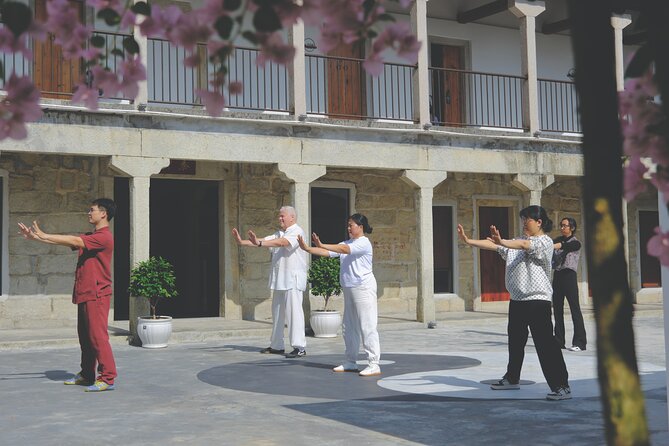
The maximum group size is 10. That is small enough to support individual guidance but large enough to create a pleasant social atmosphere.
For Tai Chi, corrections matter. A teacher may need to adjust your stance, explain where your weight should sit, or show how a movement changes when it becomes less tense. In a large class, you may receive little direct attention. Here, the group size gives you a better chance of being seen.
A small group also changes the social side of the retreat. You share meals and practice with the same people for a week. That can lead to friendships with people from different parts of the world, but it also means you should be comfortable spending repeated time with a small circle.
The program has been described as suitable for most people, but no detailed medical screening or physical limitations are provided. If you have a serious health condition, recent surgery, or major mobility concern, ask the provider whether the movements are appropriate for you. Tai Chi and Qigong may support wellbeing, but this course should not replace medical care.
Is the $100 Price Really Good Value?
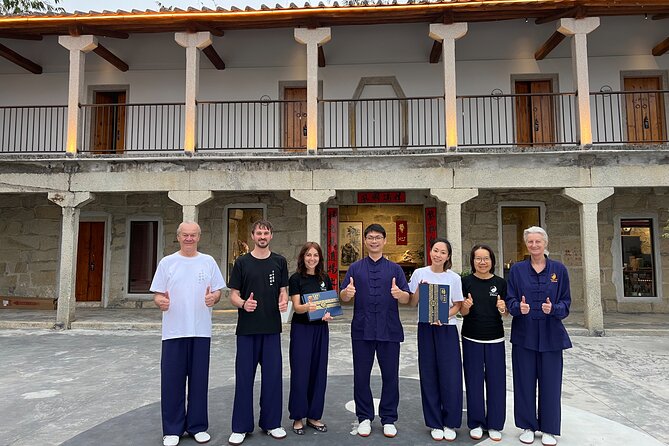
The listed price is $100 for approximately seven days. On paper, that is an unusually low figure for seven nights of lodging, three meals each day, about 20 hours of instruction, airport pickup, and taxes and fees.
That makes the offer look like excellent value, but it also means you should verify the current price and inclusions carefully. Pricing can change, and the description does not explain room arrangements, transfer details, or whether every activity outside formal training is included.
If the $100 price is accurate, the value is strongest for someone who wants a focused introduction to Tai Chi and Qigong with basic accommodation and meals included. You are not paying only for a class. You are paying for a weeklong setting where practice, food, lodging, and cultural contact are combined.
The value is less clear if you are seeking luxury. The course is described as authentic and unpretentious, not as a high-end spa retreat. Some people specifically appreciate that simple atmosphere. Others may prefer more private facilities, a detailed excursion schedule, or a wider choice of meals.
Who Should Book This Retreat?
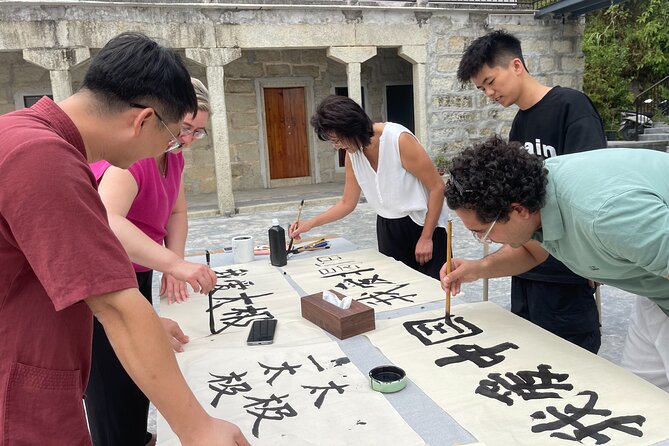
I would look closely at this retreat if you are a beginner who wants more than a one-hour introduction. The program gives you enough time to learn basic forms, repeat them, and understand why the movements are done as they are.
It also suits you if you have practiced Tai Chi or Qigong elsewhere but want to train in China with an experienced teacher. The emphasis on philosophy and discussion may be as useful to an experienced student as the physical instruction.
You should consider it if you value:
- A small group rather than a crowded class
- English-language teaching
- A family-run setting
- Chinese meals with some familiar food
- Time for meditation and quiet practice
- A week that combines study with unstructured free time
You may want a different type of trip if your main goal is sightseeing. There is no detailed list of daily excursions, famous attractions, or guided city tours. You may explore during free periods, but the course remains the main event.
The same applies if you expect medical treatment. The program includes Qigong and Tai Chi practices, and one personal account describes help with pain management after spinal surgeries. That is an individual experience, not a medical promise. Speak with your doctor before using the retreat as part of a health plan.
Booking, Cancellation, and Practical Checks
Confirmation is provided when you book, and free cancellation is available up to 24 hours before the experience starts. Cancellations made less than 24 hours before the start time are not refundable, and changes within that period are not accepted.
Before paying, I would confirm the current price, room setup, exact airport pickup process, daily schedule, and what home-comfort food options are available. These are not complaints about the program. They are the practical details most likely to affect your comfort during a weeklong stay.
The activity is listed as suitable for most people and near public transportation. It is also mobile-ticket enabled, and all fees and taxes are included in the stated package.
Final Verdict: A Good Fit for Focused Beginners
You should book this retreat if you want a personal introduction to Tai Chi and Qigong in China, and you are happy to trade luxury and a packed sightseeing plan for instruction, quiet practice, and a close-knit setting.
The strongest reasons to go are Master Ping’s English teaching, the small group, the mix of technique and philosophy, and the fact that lodging and meals are included. The main thing to check is the unusually low listed price and the precise details of transport and accommodation.
For a beginner, seven days gives you far more than a quick cultural sample. You leave with basic forms, an introduction to Eight Brocade Qigong, a better sense of the tradition, and a routine you can continue at home.
FAQ
Is this retreat suitable for beginners?
Yes. The program is designed for beginners, and no previous Tai Chi or Qigong experience is required.
How long does the retreat last?
The retreat lasts approximately seven days and includes seven nights of accommodation.
How much formal training is included?
About 20 hours of personalized training are included across the retreat.
Who teaches the Tai Chi and Qigong sessions?
Master Ping is the named teacher, and the program also includes instruction from award-winning, high-level masters.
Is instruction available in English?
Yes. The teaching is provided in English.
What will I learn during the retreat?
The program covers Qigong and Tai Chi history, stretching techniques, Eight Brocade Qigong, meditation, and 10 easy Tai Chi forms.
Are meals included?
Yes. Breakfast, lunch, and dinner are included, along with all fees and taxes.
Is accommodation included?
Yes. Seven nights of accommodation are included.
Where does the experience begin?
The listed starting point is Jieyang Chaoshan Airport in Rongcheng District, Jieyang, China.
Is airport pickup included?
Pickup is offered, but private transportation is listed as not included. Confirm the exact pickup arrangement with the provider before arrival.
How many people can join the group?
The maximum group size is 10 people.
Can I cancel for a full refund?
Yes, if you cancel at least 24 hours before the experience start time. Cancellations made later are not refundable.
New spa and massage finds around the world
- Bari, Wellness massage, from the feet to the face at studio★ 5.0 · 2 reviews
- Bath: Virtual Reality Spa and Meditation Journey★ 5.0 · 4 reviews
- BEER SPA Niedermorschwihr★ 5.0 · 5 reviews
- Bangkok: Let’s Relax Spa Terminal 21 E-Voucher★ 5.0 · 2 reviews
- Bansko: Easy snowshoeing Pirin National Park & thermal spa★ 4.1 · 19 reviews
- Bangkok: Mind n Matter Massage Spa E-Voucher★ 5.0 · 5 reviews
- Bangkok: Urban Calm Spa E-Voucher★ 3.6 · 6 reviews
- Bangkok: Spa Experience at Oasis Spa★ 4.7 · 14 reviews
Other Yoga and Wellness Retreats worth a look.
Ubud: Wellness Retreat with Massage, Yoga Class, and Lunch
Read our review →
Paddle Boarding and Meditation Wellness Experience in Las Isletas
Read our review →
Fah Lanna Traveler’s Retreat Spa Package in Chiang Mai
Read our review →
“Yoga Harmony: Embracing Wellness in the Heart of Athens”
Read our review →Lists this treatment appears on